Newton Burgoland Primary School
Class 4 Year 5 and 6
Welcome to Class 4
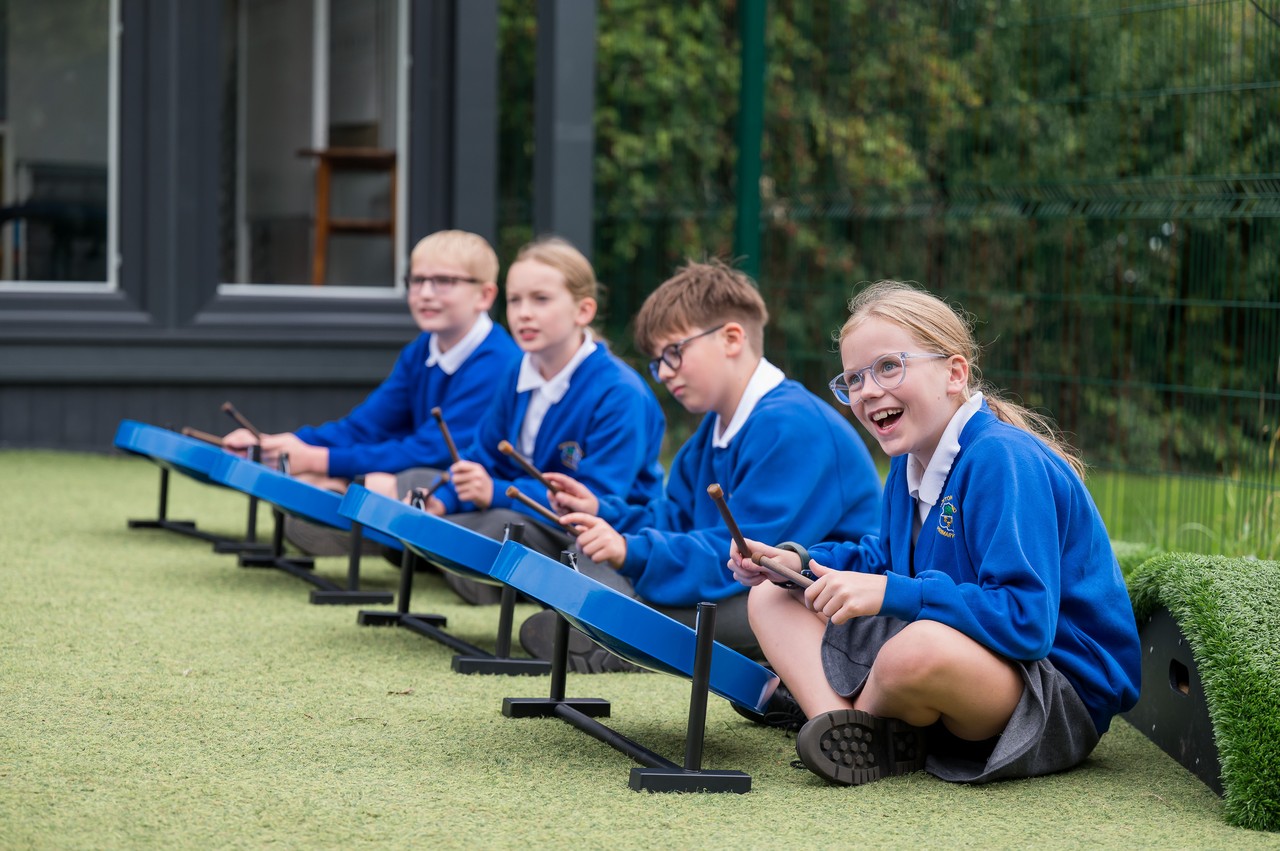
Class 4 is made up of our Year 5 and Year 6 pupils and forms Upper Key Stage 2. It is a fun, busy, vibrant and energetic place to learn, where we encourage every child to aim high, embrace challenges and develop a lifelong love of learning. Mr Percival is the class teacher supported by Mr Ikin.
Our classroom is always full of enthusiastic learners who are eager to explore new ideas and deepen their understanding of the world. From mathematics to Martians, Bosworth Battlefield to Beowulf, and Salvation to Shakespeare, our curriculum is rich, varied and designed to inspire curiosity and creativity. Every topic provides opportunities for learners to think critically, ask questions and develop the knowledge and skills they need for the future.
In Class 4, we deliver a broad, balanced and ambitious curriculum that prepares pupils for the end of Key Stage 2 and a successful transition to secondary school. Through diverse, enjoyable and challenging learning experiences, we strive to ensure that every child achieves their very best academically, socially and personally.
Learning extends far beyond the classroom. We believe that memorable experiences help children grow in confidence and character. Pupils have the opportunity to take part in an extended five-night residential visit to Standon Bowers and Laches Wood. These experiences develop independence, resilience, teamwork and self-confidence while creating lasting memories.
Children also broaden their horizons through opportunities to collaborate and socialise with pupils from other schools, helping them develop the confidence and social skills needed for the next stage of their education. A visit to Warning Zone further supports personal development by helping pupils understand and manage real-life risks, equipping them with the knowledge and skills needed to stay safe in the wider world.
Leadership and responsibility are central to life in Class 4. As the oldest pupils in the school, our learners play an important role in shaping and supporting the school community. Many take on leadership roles as School Councillors, Sports Ambassadors, Reading Ambassadors, Diversity Champions, Eco Team members and E-Safety Leaders, serving as positive role models for younger children.
Our curriculum and wider opportunities are carefully designed to develop the STRIDE values that sit at the heart of Newton Burgoland Primary School:
-
Scholarship - striving for excellence and taking pride in learning.
-
Teamwork - working collaboratively and valuing the contributions of others.
-
Resilience - demonstrating perseverance when faced with challenges.
-
Independence - taking responsibility for learning, choices and actions.
-
Diversity and Respect - celebrating differences and treating everyone with kindness and dignity.
-
Enquiry - asking thoughtful questions and developing a deeper understanding of the world.
-
Creativity and Curiosity - thinking imaginatively and embracing new experiences.
Our curriculum operates on a two-year rolling programme, ensuring full coverage of the National Curriculum whilst providing engaging and meaningful learning experiences for all pupils.
We are incredibly proud of our Class 4 learners. During their time with us, they grow into confident, responsible and compassionate young people who are well prepared for the opportunities and challenges of secondary school and beyond.
Thank you for visiting Class 4. We hope you enjoy discovering all the exciting opportunities that make our final years at Newton Burgoland so special.
Heroes or Villains
The Tudor Dynasty started here in Leicestershire with the defeat of Richard at the Battle of Bosworth. You can help at home by taking us to the museum in Leicester which celebrates the discovery of the king in the car park.
Do you remember that rhyme – divorced, beheaded, died, divorced, beheaded, survived? Was Henry really that bad? What about those who followed? We will need our detective skills to investigate:
-
Was Richard III a hero or a villain?
-
Why was he found in a car park?
-
Why do historical accounts paint him as a villain?
-
Why has the location of the battle of Bosworth moved?
-
What role did black people play in Tudor Britain?
-
What was Henry VIII really like?
-
How did Henry VIII change British life?
-
Which Tudor Monarch was the best?
We are thinking about war, monarchy and religion.
In science, we are making parachutes and exploring forces. More investigation.
In design, it gets exciting – how do marble runs work – can we make one? We examine artefacts (marble runs) design and test then make. You could make one at home.
In art, we explore set design linked to Shakespeare, bringing us back to the Tudors.
Raging Rivers
We are off to Bradgate Park to investigate rivers. While we are there, we make a quick visit to Lady Jane Grey's birthplace – those Tudors are everywhere. The atlases are out, we are finding facts about rivers around the world.
-
Which is the longest?
-
Where do they start and end?
-
Can you tell a mouth from a tributary?
Next we build on our knowledge of WWI to study WWII. You could take me to Bletchley Park to find out more. We are going to learn about Walter Tull and Alan Turing – returning to equality and diversity as core themes.
Our work in art focusses on identity.
In science, we are building our knowledge of living things and habitats.
African Adventure
We are going back to Africa. We were there in year 2 (on safari) and in class 3 (Ancient Egypt), now we are studying the history of Benin. This brings us back to Trade, Monarchy and Empire – The British one this time.
-
Soap, Margarine and tyres: Why did the British get involved in Benin and what were the effects for the Benin people ?
-
What sort of place was Benin 1,000 years ago, and how do we know?
-
What can we tell about Benin society from the images and artefacts that have survived?
-
What changes took place when the European settlers started trading?
-
How similar and different was the system of government in Benin and other ancient civilisations?
In design, we are cooking and in art looking at activism. (Should the Benin Bronzes be returned?) Maybe we could do some cooking at home? We are always happy to taste test.
In science, we are looking again at materials and their properties. We are making circuits – this complements our physical computing unit in year B using crumble.
Journeys
It is the autumn Term. Where did you travel to in the summer? Can you use a map to identify features? Can you use an atlas to find counties, capitals, mountains and rivers?
We will be taking a walk around our village using a map and compass. We will be looking at historical maps to find out about change - we come back to this in the summer term. You can help at home by taking me for a walk with a map. We could use an atlas to find places we have been as a family.
Back to the maps – can you find any Anglo-Saxon settlements just using the names of places?
Here is a clue:
-
ham (meaning 'home', as in Fulham, Westham and Birmingham)
-
tun (meaning 'town', as Skipton)
-
ford (meaning 'crossing in a river', as in Oxford)
-
burna (meaning 'stream' as in Bournemouth and Blackburn)
-
burh (meaning 'fortification', as in Canterbury; Bury St Edmunds and, simply, Bury)
We are looking at Monarchy, Empire and government to consider:
-
Why did the Anglo-Saxons invade and how can we possibly know where they settled?
-
How did the Vikings try to take over the country and how close did they get? (Why have the Vikings gained such a bad reputation?
-
How have recent excavations changed our view of the Vikings?
-
Raiders or settlers: how should we remember the Vikings?
Magnificent Mountains
Why are there mountains?
Does it matter if toursits visit Everest?
We are thinking about the core geographical themes of enviromental change and impact, alongside cutlrural awarness and diversity. We return to this when considering trade and economics. This unit needs us to retrieve learning about trade in history. We will return to our knoeldge of rocks soils and extreme earth from class 3 to consider how mountains are formed. The maps and atalses are out. You can help at home by visitng Breedon the the Hill or Dovedale. We will go with school but a second visit is very welcome as we can share our learning with you.
In science we are off to the space centre and we are finding out about the planets and the movemnt of the earth in space.
The crumble kit is out for computing - it is a challenge for us all.
Local History - Digging Deeper
Do you know about the Whitwick Mining disaster?
We are investigating local history builing on our work at the Bosworth Battlefield. You could take us to the National Mining Museum to find out more.
-
Why did so many people die in the Whitwick mining disaster?
-
Who was responsible?
-
Would it be better to work in a cotton mill or a mine?
-
What was it like for a poor child in Victorian times?
We are connecting ourt learning with the core themes of government, civilisation and diversity.
In art we are making brave chocies with colour - do you dare?
We are cooking again - salads this time.
Our favourite computer unit - at last - 3D modleling.